Rereading Vasily Grossman
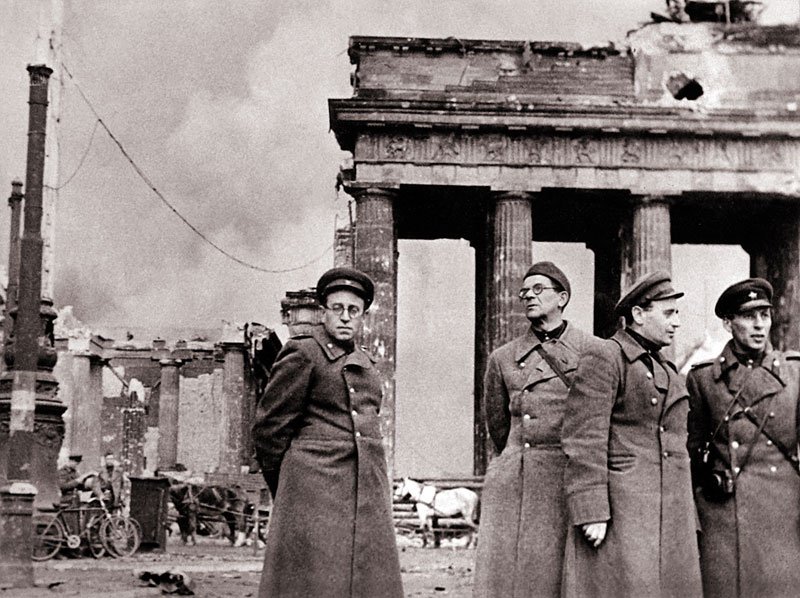
Rereading Vasily Grossman, I was struck by how much I had forgotten, by how fresh and relevant his work remains. I remember loving his prose when he was first available in the west, in the heady days of Perestroika and its aftermath, with the fall of the Iron Curtain and the Soviet Union. Then, I'd been moved by Grossman, particularly his reflections in Forever Flowing about freedom and humanity that appeared to echo the new mood on the streets of Moscow and Prague and Berlin where I wandered and studied in those heady days. I learned from Grossman what had befallen the Jews (and his own mother) during the German occupation and knew he'd spent 1000 days at the front, at Stalingrad, the correspondent for the Red Star, until he was reassigned to follow Soviet troops all the way to Berlin.
I did not know that as he accompanied Soviet troops in their pursuit of the German Army, they discovered evidence of Nazi atrocities committed by SS Sonderkommando — 93 Jewish families, murdered, their children with poison smeared on their lips. I did not know that in the summer of 1944, Soviet soldiers, Grossman with them, happened upon the death camps of Poland — Majdanek, Treblinka, Belzec and Sobibor. I never read The Hell of Treblinka, published in the Soviet Magazine, Banner, in 1944. And it wasn't until I began researching my novel, You, With Your Waiting, that I discovered Grossman's Black Book (co-edited in part by Ilya Ehrenburg, the Black Book is a compilation of eye-witness accounts of the Nazis' wholesale attempt to exterminate Soviet Jewry). Set in type in 1946 and ready for release in 1947, the Black Book was derailed by the Soviet desire to avoid particularizing Jewish suffering during the war. It wasn't released in Russia until 2014, the authorities having already effectively eradicated the history of the Holocaust by Bullets in Soviet territory and any knowledge of the extermination of Jews during WWII in its territory.
Nevertheless, my limited encounter with Grossman's work has stayed with me all these years. He wrote the Soviet experience of WWII, the Purges and the Gulags, mass starvation deliberately inflicted on the Ukraine — in honest, clear-eyed prose brimming with tenderness for humanity and at a time when these subjects were off limits to Soviet writers. Nominated for the Stalin Prize twice, Grossman's name was crossed off the list by Stalin himself. Worse, Grossman's anti-totalitarian novel, Life and Fate, was banned. He'd submitted it to Banner in 1960, thinking that after Stalin's death in 1953, in the midst of Khrushchev's Thaw, the novel had a chance. The KGB arrested the manuscript, calling Life and Fate more anti-Soviet than Pasternak's Doctor Zhivago. In so doing, the authorities further erased the memory of the Shoah in the Soviet Union. Fortunately, two copies survived. Still, the novel did not appear in the west until 1980 and in Moscow in 1989.
I write about Grossman now because not only did his work prove invaluable to my own — his writing fostered my own passion for the history of WWII in the Soviet Union — but his work remains deeply relevant. First as a witness and compiler of testimonies of the mass murder of Jews. In a world growing increasingly indifferent to the facts of the Shoah and the rise of Shoah denial in the west, Grossman is essential. His courage, his belief in human freedom and human worth on its own terms, is uniquely valuable. As I look around me at the increasingly violent political rhetoric, the loss of civility and empathy, the demonization of others and the call for death based on ethnicity, political affiliation or personal history, Grossman is more meaningful, more necessary than ever.
Source: Shayer, Maxim D. "Grossman's Resistance." Holocaust Resistance in Europe and America: New Aspects and Dilemmas. Cambridge Scholars Publishing, 2017, pp 134-163.