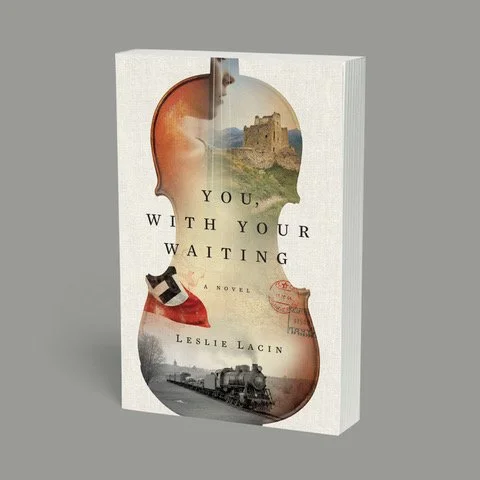
Discussion Guide for You, With Your Waiting
Leslie Lacin
A guide for book clubs, synagogue reading circles, and Holocaust education groups exploring You, With Your Waiting.
About the Novel
You, With Your Waiting follows two Jewish siblings struggling to survive in the Soviet Union during the Second World War. Through music, memory, and resilience, the novel explores the fragile bonds of family and the moral choices forced by war.
Author’s Note
You, With Your Waiting grew out of a long engagement with the history of Jewish life in Eastern Europe during the Second World War—especially the lesser-told stories of Jewish families caught in the shifting wartime landscape of the Soviet Union. While much Holocaust literature focuses on Western Europe, the experiences of Jews displaced across the Soviet Union remain less visible, though no less devastating.
I was drawn to the perspective of children, and to the ways young people absorb fear, uncertainty, and rupture differently from adults. Bronya and Avsey’s story explores not only survival, but waiting: waiting for news, for safety, for return, for a future that cannot yet be imagined. In times of upheaval, waiting becomes its own form of endurance.
This novel is a work of fiction, but it is grounded in historical research and in the testimonies of those who lived through displacement, loss, and rebuilding. My hope is that the story invites reflection on resilience, memory, and the fragile threads that hold families—and societies—together.
As survivors’ voices grow fewer, the responsibility to remember grows greater. If this book sparks conversation across generations, within communities, and in classrooms, then it has done its work.
— Leslie Lacin
Discussion Questions
Bronya and Avsey experience the war differently. How does their age shape their understanding of danger, loss, and hope?
What does “waiting” mean in the novel—waiting for safety, for news, for rescue, for adulthood? Who waits most painfully, and why?
Avsey treasures his stamp collection. In a world coming apart, what does collecting represent?
Which secondary character most surprised or moved you? What role does that character play in the siblings’ survival?
How does the novel portray survival: as luck, resilience, moral compromise, faith, or something else?
What responsibilities do bystanders carry in times of persecution? Where do you see bystander behavior in the novel?
How does displacement alter identity? Are Bronya and Avsey the same people at the end of the story as they were at the beginning?
In what ways does the novel challenge or expand your understanding of Jewish survival in Eastern Europe during World War II?
Which objects in the novel function as vessels of memory? Why do objects matter so deeply in times of upheaval?
Does the novel suggest that healing is possible after catastrophe, or only endurance? What is the difference?
The narrative moves between the present and the recent past. How does this shifting tense affect your emotional experience as a reader?
Why is it important that stories like this continue to be told—especially now?
Get the Book
You, With Your Waiting is available here